


 Deutsch
 English
 Español
 Français
 Nederlands
 Português


 Share
Share




What Are Rare Earth Elements and Why Do They Matter?
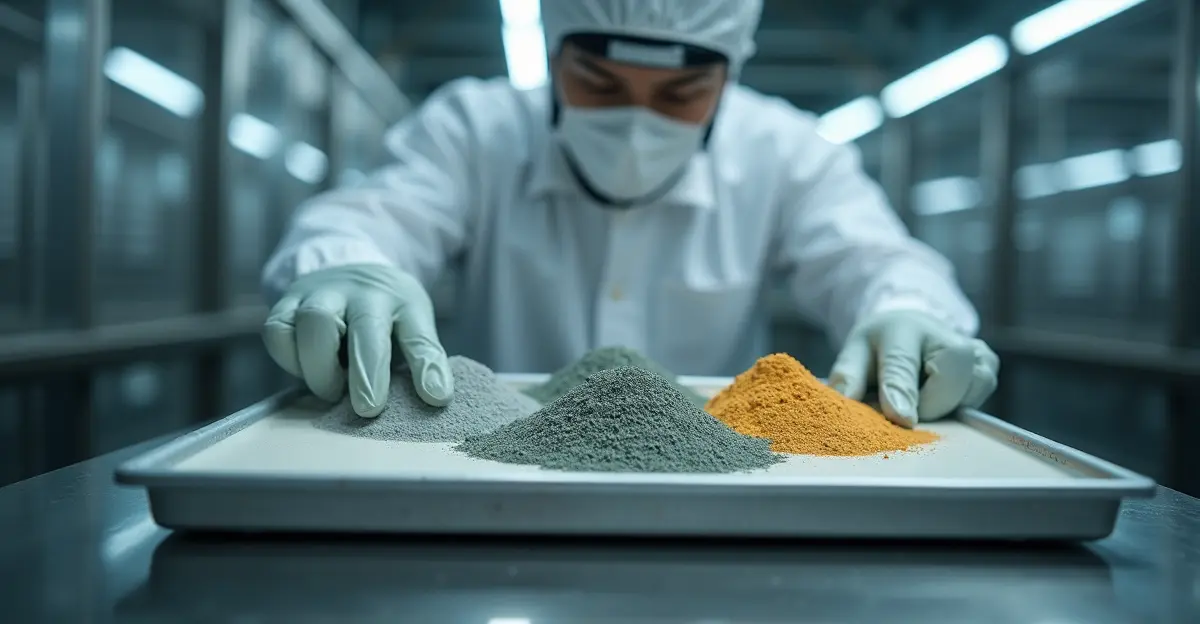
China's recent implementation of stringent export controls on 12 rare earth elements and related technologies has transformed theoretical supply chain vulnerabilities into immediate economic and security threats. Rare earth elements (REEs) are a group of 17 chemically similar metallic elements crucial for modern technology, including defense systems, artificial intelligence, semiconductors, and clean energy infrastructure. Despite their name, these elements are relatively abundant in Earth's crust but are difficult and expensive to extract and refine. China's dominance in this sector is staggering: the country controls approximately 91% of global rare earth separation and refining production and 94% of sintered permanent magnet manufacturing, giving Beijing unprecedented leverage over global technology supply chains.
The Escalation of Export Controls
In December 2025, China's Ministry of Commerce (MOFCOM) announced sweeping new export restrictions that represent the strictest controls to date. The regulations require foreign companies to obtain export licenses for products containing as little as 0.1% Chinese-origin rare earth materials, even when manufactured outside China. For the first time, China has applied the foreign direct product rule (FDPR), requiring government approval for magnets containing trace amounts of Chinese-sourced materials or using Chinese technologies. Starting December 1, 2025, companies affiliated with foreign militaries face near-automatic denial of export licenses, with any requests for military use automatically rejected.
The new controls specifically target 12 critical rare earth elements including dysprosium, terbium, scandium, and gadolinium—materials essential for electric vehicle motors, wind turbines, defense systems, and advanced electronics. According to CSIS analysis, these measures directly threaten U.S. defense supply chains, as rare earths are crucial for F-35 fighter jets, submarines, missiles, radar systems, and other advanced weapons.
Strategic Implications for Global Industries
Defense and Security Vulnerabilities
The defense sector faces immediate risks from China's export controls. Rare earth elements are essential components in precision-guided munitions, radar systems, stealth technology, and communication equipment. The U.S. defense industrial base currently has only one rare earth magnet manufacturer (Noveon Magnetics), creating significant vulnerabilities as China accelerates its military expansion at five to six times the pace of the United States. "These restrictions represent a significant escalation in weaponizing China's dominance of critical materials," notes a defense industry analyst.
Clean Energy Transition at Risk
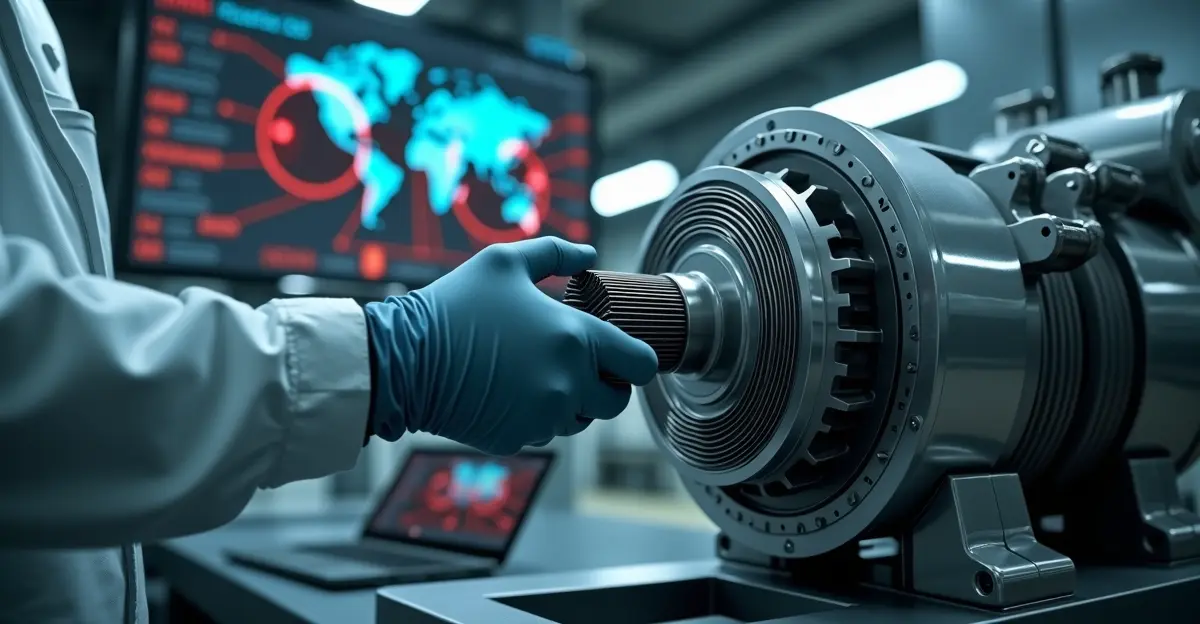
The global transition to renewable energy faces substantial disruption. Permanent magnets containing rare earths are essential components in electric vehicle motors and wind turbine generators. With China controlling 94% of global magnet production, the clean energy supply chain faces immediate bottlenecks. European rare earth prices have already reached up to six times Chinese levels, according to International Energy Agency reports, creating significant cost pressures for manufacturers.
Semiconductor and AI Development
The semiconductor and artificial intelligence sectors face targeted restrictions. China's new policy includes case-by-case reviews for exports tied to advanced chips (14nm or below logic chips, 256+ layer memory chips) and AI development with potential military applications. This strategic targeting threatens to disrupt global semiconductor supply chains and slow AI innovation in Western countries.
Geopolitical Calculus and Economic Warfare
China's move represents a calculated escalation in mineral-based economic statecraft. By leveraging its near-monopoly position, Beijing gains significant bargaining power in international relations. The timing coincides with increasing tensions over technology transfers and trade restrictions imposed by Western nations. According to IEA analysis, China dominates the refining of 19 out of 20 strategic minerals with a 70% average market share, creating systemic vulnerabilities across multiple industries.
The expanded controls now include equipment for processing rare earths and affect internationally made products containing Chinese-sourced materials, threatening global supply chains in energy, automotive, defense, and semiconductor sectors. These measures undermine international diversification efforts and create significant vulnerabilities for strategic industries worldwide.
Limited Effectiveness of Western Diversification
Current Western efforts to diversify rare earth supply chains face significant challenges. While countries like the United States, Australia, and Japan are investing in new mining and processing facilities, the timeline for achieving meaningful independence remains lengthy. According to a comprehensive 2026 review by Concordia University researchers, less than 5% of rare earths are recycled despite technical potential for over 90% recovery. The critical minerals strategy faces fundamental bottlenecks in midstream processing capacity, where China maintains overwhelming dominance.
The European Central Bank analysis reveals that over 80% of large European firms are within three intermediaries of Chinese rare earth producers, with manufacturing sectors like automotive and energy being particularly vulnerable due to their reliance on rare earth magnets. Even when sourcing from other countries, the euro area remains indirectly exposed as suppliers like the US import 80% of their rare earths from China.
Price Disparities and Market Impacts
The immediate economic impact of China's export controls is evident in dramatic price disparities. European rare earth prices have reached up to six times Chinese levels, creating significant competitive disadvantages for manufacturers outside China. These price differentials threaten to undermine the economic viability of clean energy technologies and advanced manufacturing in Western countries.
According to S&P Global analysis, rare earth supply bottlenecks are expected to persist through 2026, creating ongoing challenges for industries dependent on these critical minerals. The continued supply constraints reflect structural issues in the global rare earth market, where production remains highly concentrated and new mining projects face significant development timelines.
Urgent Need for Resilient Supply Chains
The current crisis underscores the urgent need for comprehensive supply chain resilience strategies. Key solutions proposed by experts include rebuilding Western midstream processing capacity, developing circular recycling loops, implementing AI-enabled separation technologies, and adopting green metallurgy to reduce environmental impacts. The global supply chain resilience must address the fundamental bottleneck in rare earth refining, where China maintains overwhelming control.
International cooperation among like-minded nations will be essential to develop alternative supply sources and reduce dependence on Chinese supplies. However, the timeline for achieving meaningful diversification remains challenging, with most experts estimating a minimum of 5-10 years for new projects to reach commercial scale.
FAQ: China's Rare Earth Export Controls
What rare earth elements are affected by China's export controls?
China's export controls target 12 critical rare earth elements including dysprosium, terbium, scandium, gadolinium, and other materials essential for high-tech applications. These elements are crucial for electric vehicle motors, wind turbines, defense systems, and advanced electronics.
How does China dominate the rare earth industry?
China controls approximately 91% of global rare earth separation and refining production and 94% of sintered permanent magnet manufacturing. The country also holds 81% of rare-earth-related patents filed between 2014-2024 and maintains the world's largest known reserves at 44 million tonnes.
What industries are most vulnerable to these export controls?
The defense, clean energy, semiconductor, and artificial intelligence sectors face the greatest risks. Defense systems like F-35 fighter jets, electric vehicle motors, wind turbines, and advanced chips all depend on rare earth elements that China now tightly controls.
How are prices affected by these export controls?
European rare earth prices have reached up to six times Chinese levels, creating significant cost pressures for manufacturers outside China. These price disparities threaten the economic viability of clean energy technologies and advanced manufacturing in Western countries.
What are Western countries doing to reduce dependence?
The United States, European Union, Australia, Japan, and other nations are investing in new mining and processing facilities, forming supply agreements among allies, and developing recycling technologies. However, achieving meaningful independence from Chinese supplies will take 5-10 years for most projects.
Sources
International Energy Agency (IEA) analysis on critical minerals export controls; CSIS analysis on China's rare earth and magnet restrictions; European Central Bank vulnerability assessment; S&P Global rare earth supply bottleneck analysis; Concordia University 2026 review of rare earth supply chains; Reuters reporting on China's export control tightening.


Follow Discussion